When It Breaks
Outage and escalation plays for support and CS
- 24 plays in 5 chapters
- 12 templates
- 47-page PDF
Digital download. Read the free sample first (3 complete plays, PDF).
Want the free CS Agent Playbook sample too? Get it by email.
Status page templates and on-call guides are built for the engineering response. They stop where your job starts.
When something breaks, support and CS are the ones answering the customers. You need to spot the pattern in the queue before anyone declares an incident, reply to fifty people without guessing at the cause, call your biggest accounts before they hear it from their own staff, answer the credit request fairly, write the letter afterwards, and handle the customer executive who emails your CEO.
When It Breaks covers that side, in 24 plays. Each one gives you:
- what tends to go wrong in that moment, and why
- the move, step by step, and who does it
- the words to say on the call and in writing
- if-then decision rules
- the mistakes that make things worse
- an agent prompt that gathers facts from your tickets and incident channel and drafts the message while you handle the people
- a check step for the agent's draft, so a guessed cause or fix time never goes out
Say what you know. Give a time for the next update and keep it. Never promise what you can't keep. And where you need a number, like how often to update or how much goodwill to propose, you get a labelled starting default with the reasoning shown.
What's inside
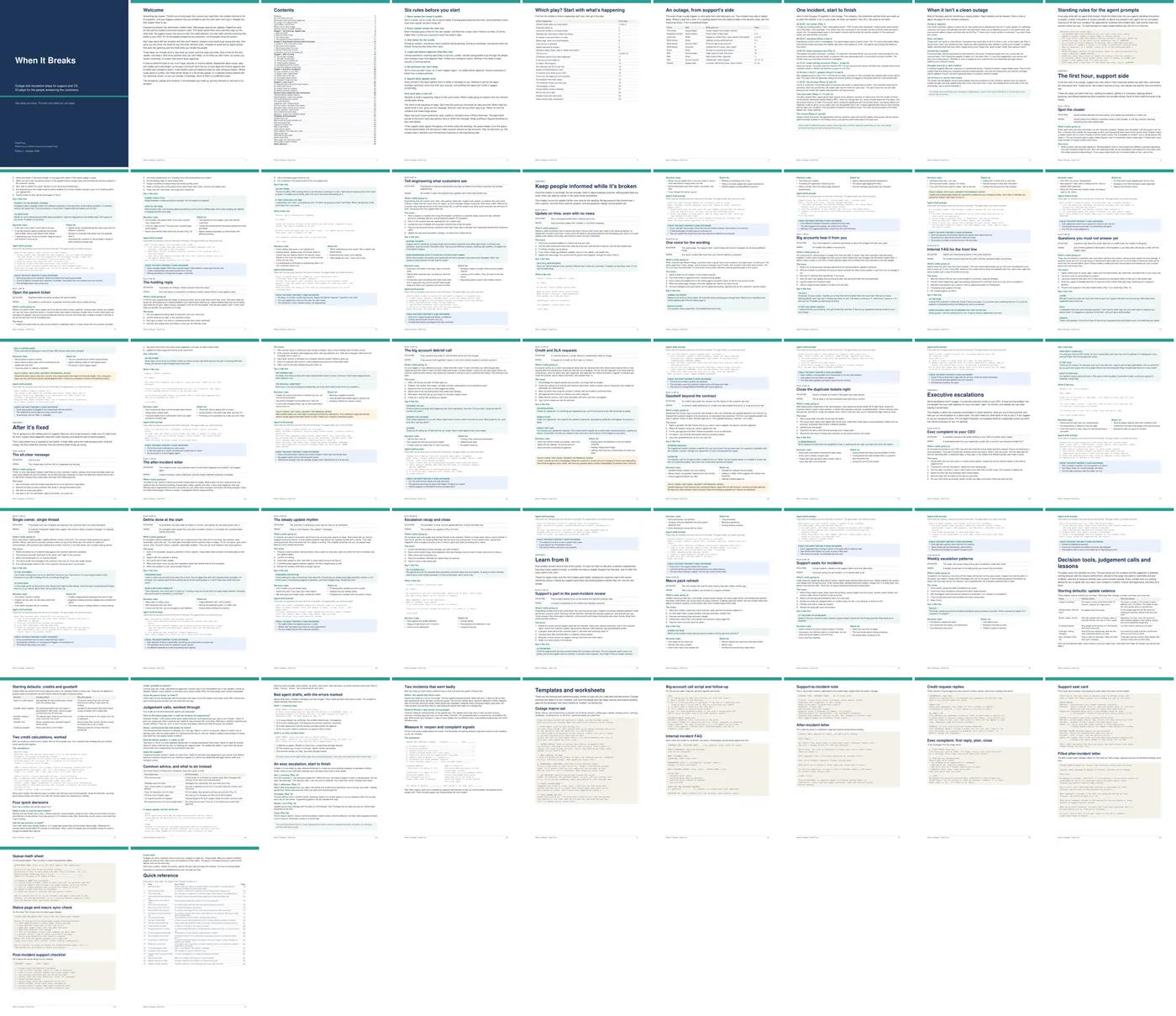
- 24 plays in 5 chapters: the first hour, keeping people informed while it's broken, after it's fixed, executive escalations, and learning from it
- A which-play map and an outage timeline from support's side: who does what, and what goes out when
- One made-up incident followed from first ticket to review, plus adjustments for messy incidents: partial or regional, slow not down, supplier-caused, possible security or data incidents, and out of hours
- Decision tools: starting defaults for update cadence and for credits and goodwill, two worked credit calculations with made-up contract terms, and four quick decisions (raise it or wait, call or email, credit or goodwill, close or hold)
- Four judgement calls worked through, common advice set against what to do instead, a vague update beside the fixed one, and bad agent drafts with each error marked
- A made-up exec escalation from first email to close, and two made-up incidents that went badly
- A reopen and complaint signals worksheet for every incident
- 12 templates: a seven-part macro set built around what the customer is doing, a big-account call script and follow-up email, an internal incident FAQ, a support-to-incident note, an after-incident letter and a filled example, credit request replies (due, not due, goodwill), exec complaint first reply, plan and close, a support seat card, a queue math sheet, a status page and macro sync check, and a post-incident support checklist
- Three support seats that make incidents calmer: writer, queue keeper and account caller
- Policy check boxes wherever cause statements, data, credits or contracts come up, sending you to your own legal, finance and security owners
- A 47-page PDF, plus a free sample with 3 complete plays (The holding reply, Big accounts hear it from you, Credit and SLA requests)
Who it's for
Support leads, CSMs and account owners at software companies who face customers during outages, major bugs and executive escalations.
Who it's not for
Engineering incident commanders looking for technical response process, or anyone looking for legal, security or financial advice.
The fine print
Written by Draft First, a customer success and support lead. The companies, people and incidents in the examples are made up. Where the book gives a number, it's a labelled starting default with its reasoning, not a published target. Not legal, security or financial advice.
Questions: hello@draftfirstcs.com
All sales are final.
Get When It Breaks
Digital download. Read the free sample first (3 complete plays, PDF).
Questions before you buy? Email hello@draftfirstcs.com.
Related playbooks
Ready to Escalate
Support to engineering plays for technical support teams
For technical support engineers and tier 2 or tier 3 support: escalate once, keep the customer honestly informed and close the loop.
$29All sales are final.
Hard Conversations
De-escalation plays for software support agents and the leads who train them
For frontline support agents and the leads who coach them: a move for the furious opener, the third contact and "get me your manager".
$24All sales are final.
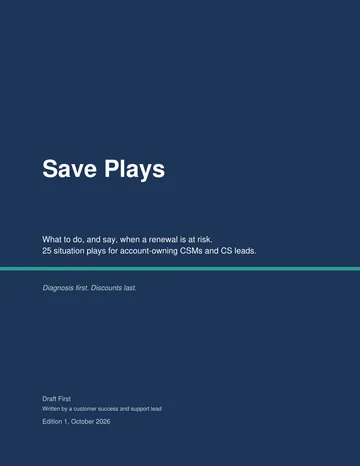
Save Plays
What to do, and say, when a renewal is at risk
For CSMs and account managers who own renewals: find the real reason behind "it's too expensive", then use the move that fits it.
$29All sales are final.
See all playbooks or The CS Agent Playbook.